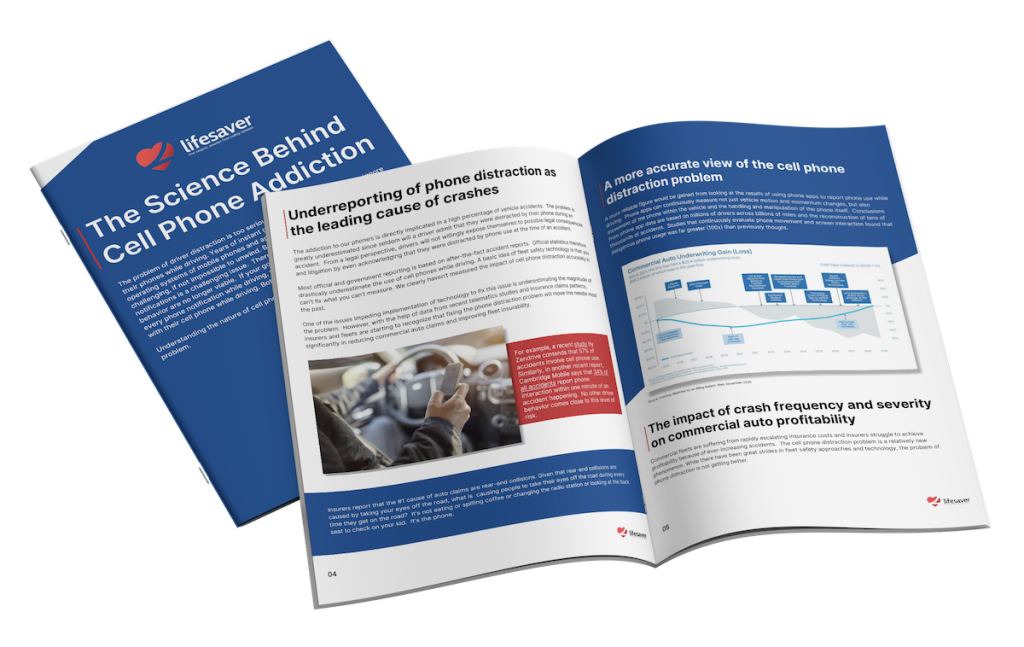
Cell phone distraction and driving is one of the areas fleets should focus on to improve their safety and insurability moving forward. With the advent, popularity, and frankly, clear and growing addiction to cell phones, driver interaction with their phone while driving is known to be a leading cause of accidents. Cell phone induced driver distraction is easily provable after the fact and is a focus of plaintiff attorney actions when an accident occurs. In spite of increased focus and spending on fleet safety and driver behavior, accident rates and related claim costs continue to rise significantly.

Approaches to Mitigate Cell Phone Induced Driver Distraction
Fleets approach cell phone distraction in a variety of ways. Technology, for example, can identify the problem and provide feedback for driver coaching. This approach identifies behavior—but does not necessarily correct it (think AI camera recognizing the handling of a phone while driving and providing audio feedback to the driver as well as reporting the behavior to management).
Alternatively, a fleet safety app that’s installed on a driver’s phone will either recognize the handling of cell phones and possible screen interactions while driving, or even block the dangerous cell phone misuse altogether.
Given that 57% of all collisions involve some form of mobile distraction, it’s becoming increasingly more difficult for companies to keep ignoring the problem. Some companies have taken the approach to identify the cell phone misuse problem and let the driver know.
There are 3 reasons why measuring phone distraction is not as effective as blocking it:
- Measuring phone handling is not an accurate measurement of phone distraction.
-
- Phone unlocks are a much more reliable measure of phone use than phone handling or phone movement which is known to be less accurate, leading to employee distrust of the metrics being reported.
-
- According to this article, Amazon drivers are coming up with creative workarounds to avoid getting dinged for phone distraction violations, which are being triggered by “any movement [of the phone] as a sign of distracted driving.”
- Measuring phone handling cannot overcome human nature.
-
- Humans are programmed to answer phone notifications, so you have to prevent access. If you don’t stop it, then it could be too late.
-
- Measuring and even warning the driver to put their phone or tablet down does not stop the problem. We have seen many companies have reached out to LifeSaver Mobile to stop the problem after their dashcam metrics revealed that the frequency of mobile distraction was much higher than they had suspected.
- Measuring phone distraction while driving still requires coaching the behavior.
-
- Look for solutions that stop vs. warn vs. coach the risky behavior since fleet managers don’t have the time or resources to coach.
-
- Coaching your employees on the dangers of texting and driving will raise awareness but in order to be effective, this message has to be constantly repeated which is time consuming and requires a lot of resources.
The best approach is to just stop the problem from happening in the first place. Cell phone compliance solutions are a cost-effective way to tackle this problem. Given that the mobile distraction is the leading cause of crashes and that the cell phone compliance solutions can prevent a great majority of the leading distraction from occurring, it stands to reason that most organizations will realize a significant savings from deploying this type of program. If you’re interested in learning how to calculate your company’s savings, please visit our Fleet Savings Calculator.
Yesterday’s fleet safety standards do not meet today’s requirements
The best tool that a fleet has to minimize the negative impact of today’s fleet insurance environment is to live up to an ever-evolving standard of care when it comes to safety. What was once considered a reasonable approach to fleet safety years ago would now be painted by plaintiff attorneys as negligent. Greater insight into driving issues and implementation of technology to mitigate the associated risks of phone distraction is now expected of responsible fleets. Proven technology solutions are available at reasonable prices to effectively address the issue of phone distraction while driving.
The fleet driver cell phone distraction issue has become such a clear cause of accidents that liability associated with not handling this issue will provide the grounds for negative legal outcomes and nuclear verdicts stemming from the inevitable increase in accidents. While many solutions tout the ability to identify risky phone use and claim reductions in phone misuse, the exposure is still there. The probability of an accident does not go away, and a fleet’s improvement is contingent on ongoing and effective coaching of drivers and incentivizing voluntary driver compliance. Given the choice between measuring vs. preventing phone distraction behind the wheel, we think the decision is pretty easy… prevention is clearly the more effective approach.