Fleets can take a variety of paths to improve driver behavior. Fleets may use formal driver training programs, telematics programs that identify safety issues such as speeding or aggressive braking, or dash cams that provide more insight into driver distraction. Regardless of the approach, for identified risk to yield driver improvement, corrective action is required. And to result in a positive change in behavior, corrective action must be delivered to the driver in a timely fashion. Driver alerts are an effective way to let the driver know of suggested improvements in driving and can improve driver safety while not requiring intensive time in coaching.
What do driver alerts look like?
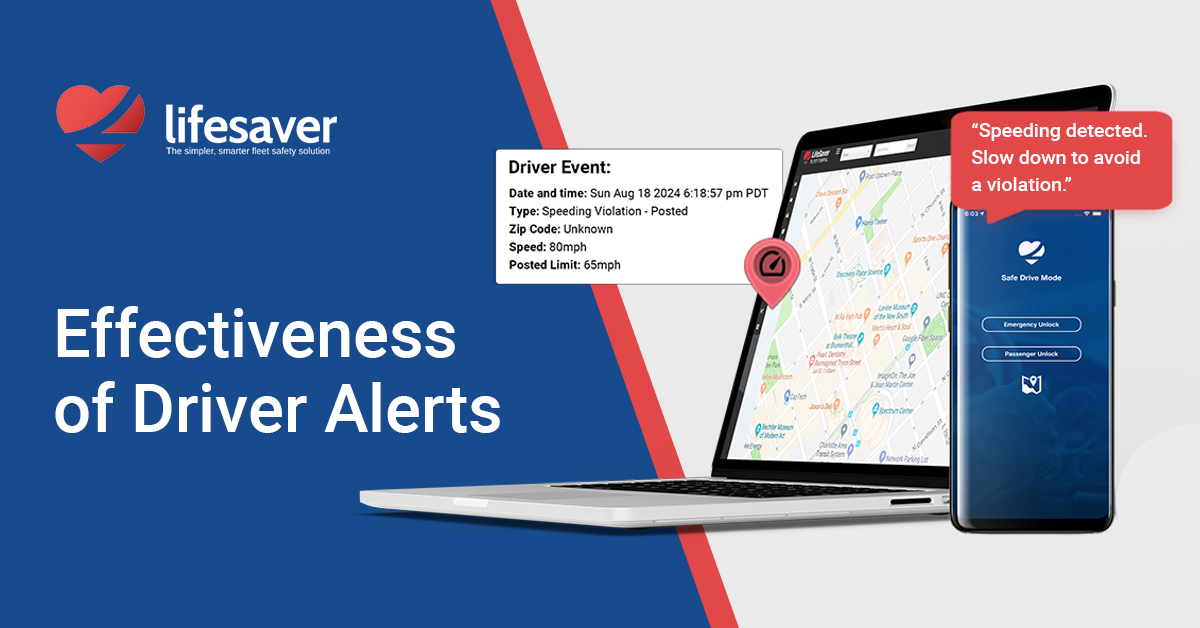
For an alert to be effective, it will need to get the driver’s attention. Examples of effective driver alerts are visual alerts, such as an oil pressure or low fuel warning or audio alerts such as beeps signifying to the driver that a speed threshold has been exceeded. Dash cams with driver alerts may provide pre-recorded audio feedback to the driver, signaling that an unsafe behavior is occurring (“put your phone down, slow down, watch your following distance”). This quick and focused feedback loop allows drivers to know what they have done wrong at the moment they do it.
Downside of audible driver alerts
- Audio feedback can be distracting as the driver’s focus shifts to the warning and causes an added degree of distraction.
- Drivers can experience “alert fatigue” causing them to pay less attention to audio warnings over time — especially if they are not receiving reporting feedback or other consequences.
- Audible driver alerts may improve driver behavior but management must maintain oversight to confirm progress, adherence to programs, and identification of those who are not responsive.
- Beeps and dings may get confusing as they may signify more than one type of behavior. Audio feedback can be more effectively received if the audio is actually recorded as spoken words versus an ambiguous beep or other sound.
Advancements in driver safety technology are enabling drivers to improve their behavior on their own without the need for management involvement and feedback. Overall, this is a net positive. Management is already challenged to provide the time and resources necessary to provide feedback to drivers and monitor performance moving forward. Without follow up to drivers regarding the safety considerations that need improvement, the fleet could be liable for negligent entrustment. This means that while risk has been identified, it has not been acted on in a positive manner.
Driver alerts: the bottom line
Audio feedback to drivers can result in improvements in driving behavior. Since the driver alert needs to get the driver’s attention, it will usually take the form of a beeping sound or a pre-recorded audio message. The downside to audible driver alerts is the beeps or dings or even pre-recorded messages from fleet safety technologies can be ignored by the driver due to alert fatigue. In addition, the driver may choose to ignore these alerts if they realize that there are no consequences for unsafe behavior.
One approach to avoid alert fatigue is to keep the alert dynamic by changing the message from time to time and also using personalization to get the driver’s attention when the alert is delivered. One example of this approach is to use a technology to deliver customizable voice alerts for speeding to your drivers such as the ones in this short video clip.