Fleet safety is more than a buzzword—it’s a critical responsibility. Partially implementing a fleet safety program, where only some drivers are protected, can expose your company to significant financial, legal, and reputational risks. This article explores why protecting your entire fleet is essential for mitigating liability, fulfilling duty of care, and fostering a safer workplace.
Liability Exposure: The Hidden Costs of Partial Coverage
Protecting only part of your fleet presents several challenges:
- Clear Criteria: The company must not cherry pick employees for the program unless there is a clear and justifiable reason for doing so. The criteria for being placed into a safety program cannot be arbitrarily applied or even look arbitrary. The risks are obvious, including legal challenges and employee morale.
- Hard to Predict Accidents: Depending on the risk, it can be very challenging to predict who will be the next employee to fall prey to the risk. For example, cell phones were designed to be very addictive and there is a good argument that any employee could be checking their phone during a drive, regardless of their accident history. You should include all company cell phones (and personal phones if possible) in a cell phone compliance program vs. cherry picking certain employees.
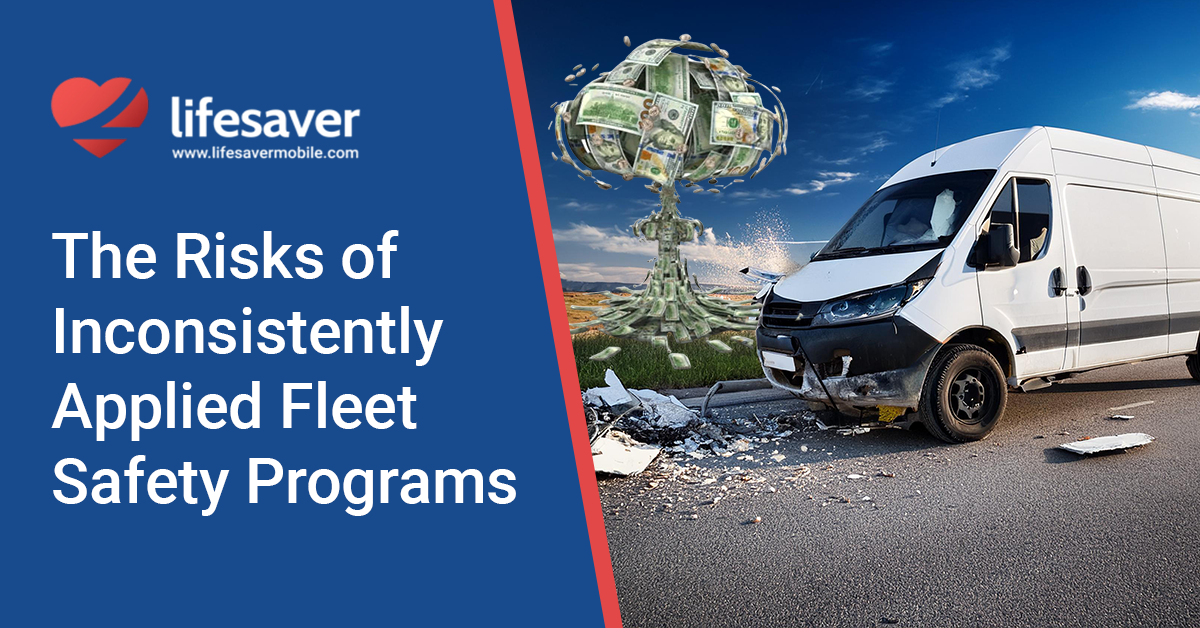
- Selective Implementation = Negligence: Finally, cherry picking your employees to participate creates a dangerous precedent. Imagine a fleet of 1,000 vehicles where only 200 are equipped with safety tools. If an uncovered driver causes an accident, courts may interpret the selective implementation as negligence, leaving the company vulnerable to lawsuits and massive “nuclear verdicts.”
Fleet operators must ensure reasonable measures are in place to protect employees and the public from foreseeable risks. Inconsistent fleet safety programs can be seen as a breach of duty, leading to lawsuits with damages far exceeding the cost of comprehensive safety measures.
Key components of a strong duty of care, commercial fleet safety program include:
- Universal safety policies to reduce distractions and speeding
- Consistent training and monitoring for all drivers
- Equipping every vehicle with safety technology
Real-world risks of inconsistency in fleet safety programs include:
- Legal Scrutiny: Partial programs suggest negligence, amplifying potential penalties in lawsuits.
- Employee Morale: Drivers excluded from safety measures may feel undervalued, leading to lower retention and morale. On the other hand, drivers that are included may feel like they are being singled out or targeted.
- Insurance Challenges: Inconsistent practices can increase premiums or limit coverage options.
Protecting your entire fleet with consistent safety measures demonstrates a commitment to risk reduction, strengthens legal defenses, and enhances your reputation. Tools like LifeSaver Mobile prevent distracted driving and reduce speeding, offering an affordable, scalable solution to protect all drivers equally. Half-measures aren’t enough. A fleet-wide safety program is not just a safeguard against liability—it’s a moral and operational imperative. Protecting every driver ensures better outcomes for your business, employees, and the communities you serve. Choose safety without compromise. It’s a decision that saves lives — and your company.
Don’t Let Inconsistency Be Your Weakest Safety Link
When it comes to fleet safety, half-measures aren’t just ineffective—they’re dangerous. By protecting only part of your fleet, you expose your company to massive liability risks and potential duty of care lawsuits that could have been avoided with comprehensive safety measures.
Investing in a comprehensive fleet safety program is not just a legal safeguard — it’s a moral imperative that protects your drivers, your business, and the communities you serve.
Make the choice to protect everyone, not just some. It’s a decision that could save lives—and your company.