When it comes to fleet safety, prevention will always be better than reaction. This is especially true for distracted driving, a problem that continues to put lives, businesses, and reputations at risk. Many companies rely on notification based systems that alert them when drivers use their phones, requiring constant monitoring and coaching. While visibility is important, it doesn’t eliminate the root cause. The best way to solve a problem is to prevent it from happening in the first place — this is where engineered solutions come in.
The Difference Between Engineered and Notification Based Solutions
A notification based solution relies on monitoring and alerts to inform fleet managers when drivers are engaging in risky behavior. These systems provide after-the-fact data that require ongoing oversight, feedback loops, and discipline. The assumption is that with enough coaching, behavior will change. However, this approach has limitations:
- Delayed intervention: By the time a driver is notified or coached, the distraction has already occurred, increasing the risk of an accident.
- Compliance challenges: Employees may ignore notifications or find ways to bypass monitoring.
- Operational burden: Fleet managers must track violations, conduct coaching sessions, and hope drivers improve over time.
In contrast, an engineered solution eliminates the opportunity for distraction altogether. Instead of alerting you when a driver is on their phone, it prevents access to the phone while driving — removing the need for enforcement, coaching, or compliance headaches.
Common Sense Examples: When Prevention Works Best
We accept engineered systems in countless aspects of life because they prevent problems before they occur. Here are a few everyday examples:
- Seat belts vs. accident reports: Would you rather read an accident report about a driver not wearing a seat belt, or ensure the seat belt is always worn with an automatic locking system? The latter removes the risk of injury instead of just documenting non-compliance.
- Child safety locks vs. parental warnings: Instead of constantly reminding a child not to open a car door while moving, child safety locks prevent the door from opening in the first place. There’s no need for coaching—just guaranteed safety.
- Factory safety guards vs. employee training alone: Manufacturing plants use machine guards to prevent injuries, rather than relying solely on employees to remember not to place their hands near dangerous moving parts. The physical barrier eliminates the risk entirely.
- Airport security measures vs. post-incident investigations: TSA doesn’t just notify authorities when someone carries a prohibited item onto a plane. They use scanners, checkpoints, and restricted access areas to prevent threats from boarding in the first place.
In every example, the engineered solution saves lives, time, and money by eliminating the risk instead of managing it reactively. The same principle should apply to distracted driving.
Use Cases for Engineered Solutions from Other Industries
Engineered systems are the gold standard across high-risk industries. Here’s how they work in different fields:
Healthcare: Preventing Medication Errors. Hospitals don’t just rely on doctors and nurses to remember proper dosages—they implement automated medication dispensing systems that prevent incorrect dosages from being administered. This removes human error from the equation and protects patients.
Cybersecurity: Blocking Threats Instead of Just Monitoring. Instead of only notifying IT teams when a data breach occurs, businesses deploy firewalls and intrusion prevention systems to block threats before they reach critical systems. Prevention eliminates damage before it happens.
Aviation: Autopilot and Safety Systems. Airlines use automated pilot assistance and collision avoidance systems to prevent crashes rather than just recording pilot errors. These engineered solutions make flying one of the safest modes of transportation.
Why Distracted Driving Needs an Engineered Solution
Now, consider the stakes in fleet safety. A single distracted driving incident can lead to:
- Fatalities and injuries – Human lives are at risk every time a driver picks up their phone.
- Expensive lawsuits and insurance claims – Even one accident can cost a company millions in legal fees and settlements.
- Reputational damage – Businesses that fail to curb distracted driving risk public backlash and scrutiny.
- Lost productivity – Accidents lead to downtime, vehicle repairs, and operational disruptions.
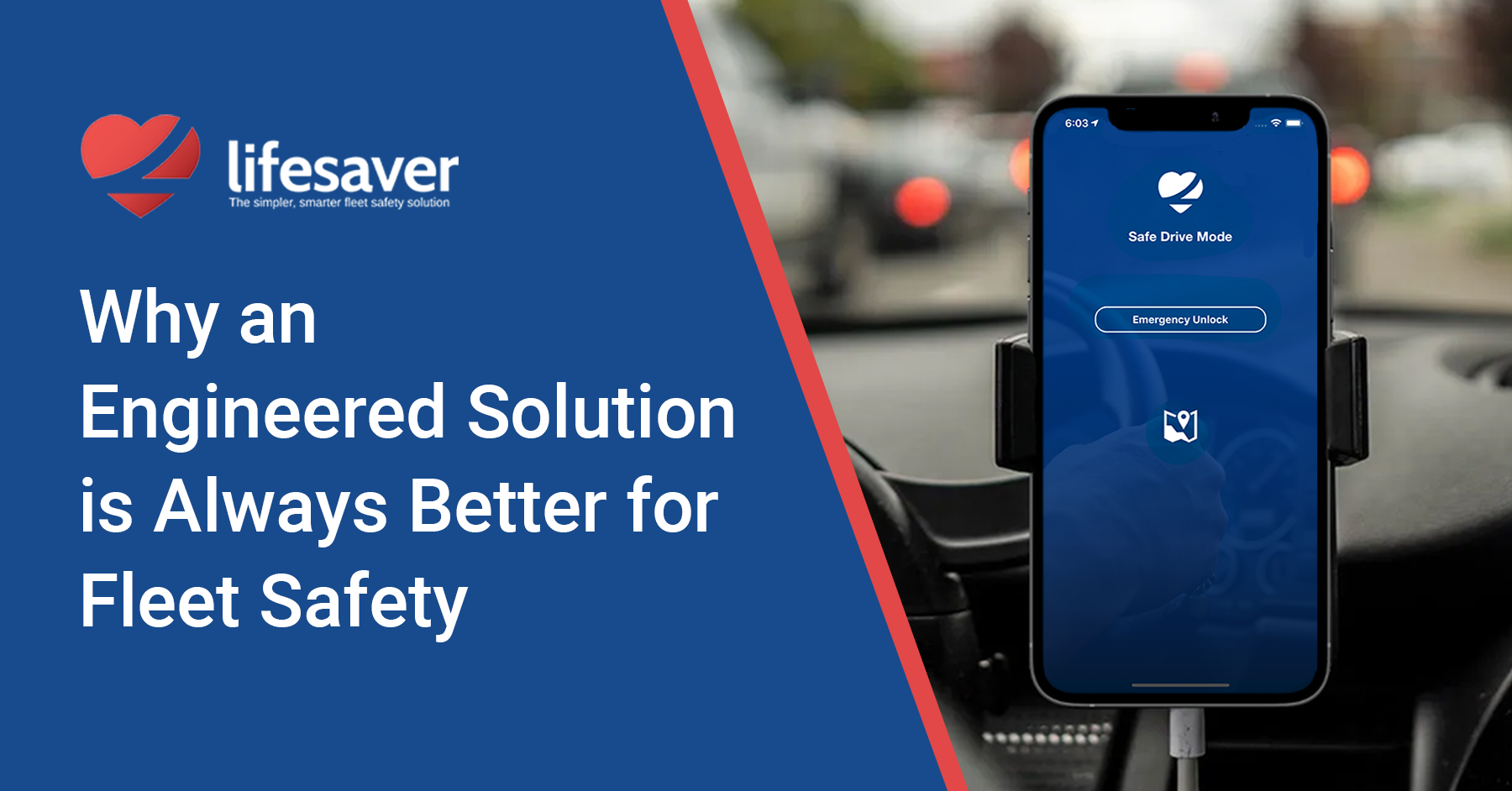
An engineered software like LifeSaver Mobile eliminates the opportunity for distraction by blocking phone use while driving. Unlike camera-based notification systems that alert you after the fact, LifeSaver prevents risky behavior before it happens — ensuring full compliance without the need for constant coaching.
The Bottom Line: Prevention Over Reaction
Would you rather manage distracted driving through endless monitoring and coaching, or eliminate it altogether? The answer is clear. Engineered solutions always win over notification based systems because they remove risk rather than just documenting it.
By blocking phone use before it starts, LifeSaver Mobile ensures safer roads, protects drivers, and saves companies from unnecessary costs and liability. When it comes to distracted driving, prevention isn’t just better — it’s necessary.