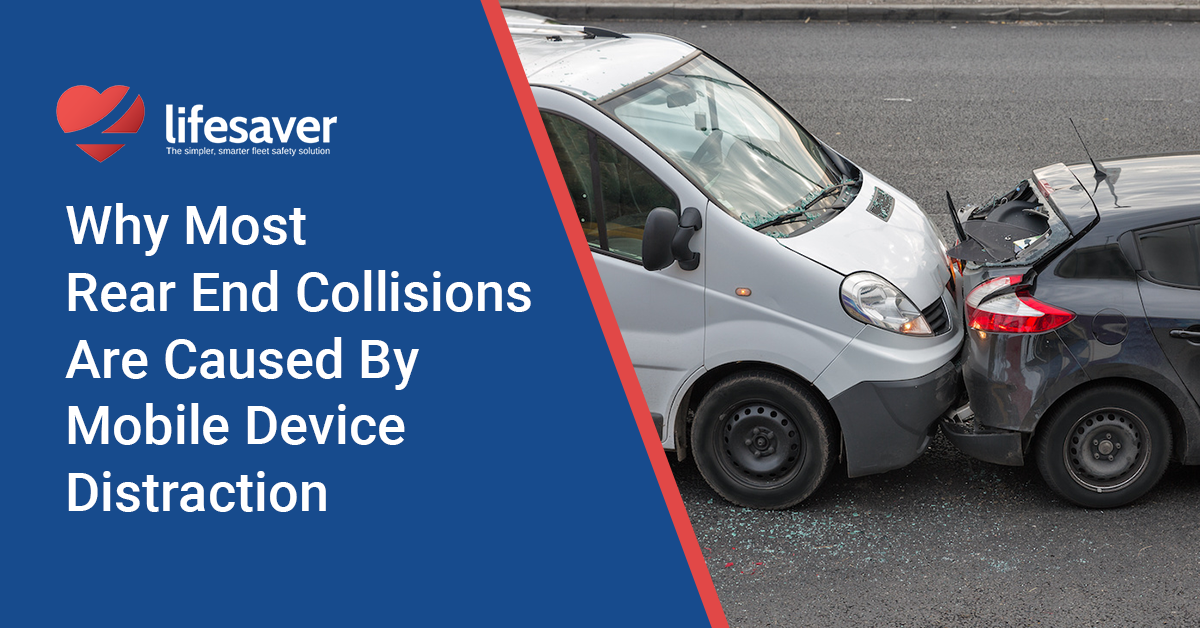
Rear end collisions are the number one cause of auto claims. For fleet safety programs, avoidance of rear end collisions should be a primary focus. In a rear end collision, the car that makes contact with the vehicle in front of it is typically the liable party. Attention to the road ahead is the key requirement to avoid at-fault rear end collisions. There is undeniably a strong correlation between rear end collisions and driver distraction from cell phone use. Commercial fleets are showing an increase in rear end collisions, indicative of increased driver distraction.
The great multiplier of severity and frequency of accidents
Modern technology provides us greater insight into the behaviors that heighten the risk for an accident. These behaviors can include elements of speeding, aggressive braking, unsafe following distance and driver distraction. Driver distraction is especially important because it multiplies the negative effects of most other behaviors.
Driver distraction, in combination with speeding, lessens the window of correction available to the driver to avoid an accident. When combined with a poor following distance, the time to react to any risk driving situation is lessened. If a driver shows signs of overly aggressive braking, distraction will only increase the need to brake aggressively. All elements of driver safety are compromised if the driver’s attention is diverted.
Mobile Distraction: The main cause of rear end collisions
If a driver is paying attention, he or she should have sufficient time and space to react when the vehicle in front stops unexpectedly, and a rear end collision should never happen.
While drivers can be distracted from a variety of sources, all but one of those distractions are typically infrequent. These infrequent distractions include issues of eating or drinking, looking at the entertainment console, personal grooming issues, etc.
What is the one thing that causes people to take their eyes off the road in every single drive? It’s not eating or spilling coffee, changing the radio station or looking at the back seat to check on your kid. It’s the cell phone. The phone is the consistent interrupter of driver attention that occurs in every single drive. Every time that phone or tablet sends a notification, text message or call, it’s yearning to be looked at and we are programmed to respond immediately
How big is the rear end collision problem?
Recent studies by app-based telematics solutions along with claims data by many US auto insurers all seem to indicate that mobile device distraction is involved in close to 60% of all claims. While this percentage does not seem surprising to any of us given how much phone distraction we each see on the roadways in our communities during every single drive, the percentage is further validated by one insurance provider who identified that nearly half of all their 2023 auto claims were caused by rear end collisions. If we accept the assertion that almost all rear end collisions are caused by mobile device distraction, then it stands to reason that the #1 focus for driver safety and fleet safety programs should be to lower the incidence of rear end collisions.

How can fleets mitigate the risk of rear end collisions?
The biggest ways to mitigate the risk of rear end collisions are to eliminate the temptation to take your eyes off the road, to eliminate excessive speeding and to increase following distances to allow more time to react.
In-cab technologies can help with both factors. Companies can mandate software on their work and/or personal mobile devices to eliminate the temptation to use them during the drive. Companies can also use speed governors to prevent the excessive speeding that causes crash severity. Finally, companies can use cameras to warn when the driver is following too closely.